
Planning a New Lab? 5 Things You Must Consider for Your Facility
By Arena Consultants · May 8, 2025 · 3 min read
Building a new laboratory is a long-term investment. The decisions made at the planning stage will shape how the lab works, how safe it is and how well it adapts for decades to come.
Labs are changing faster than ever, driven by automation, data and new ways of working. So if you are planning a new facility, here are five things you must consider from the very beginning.
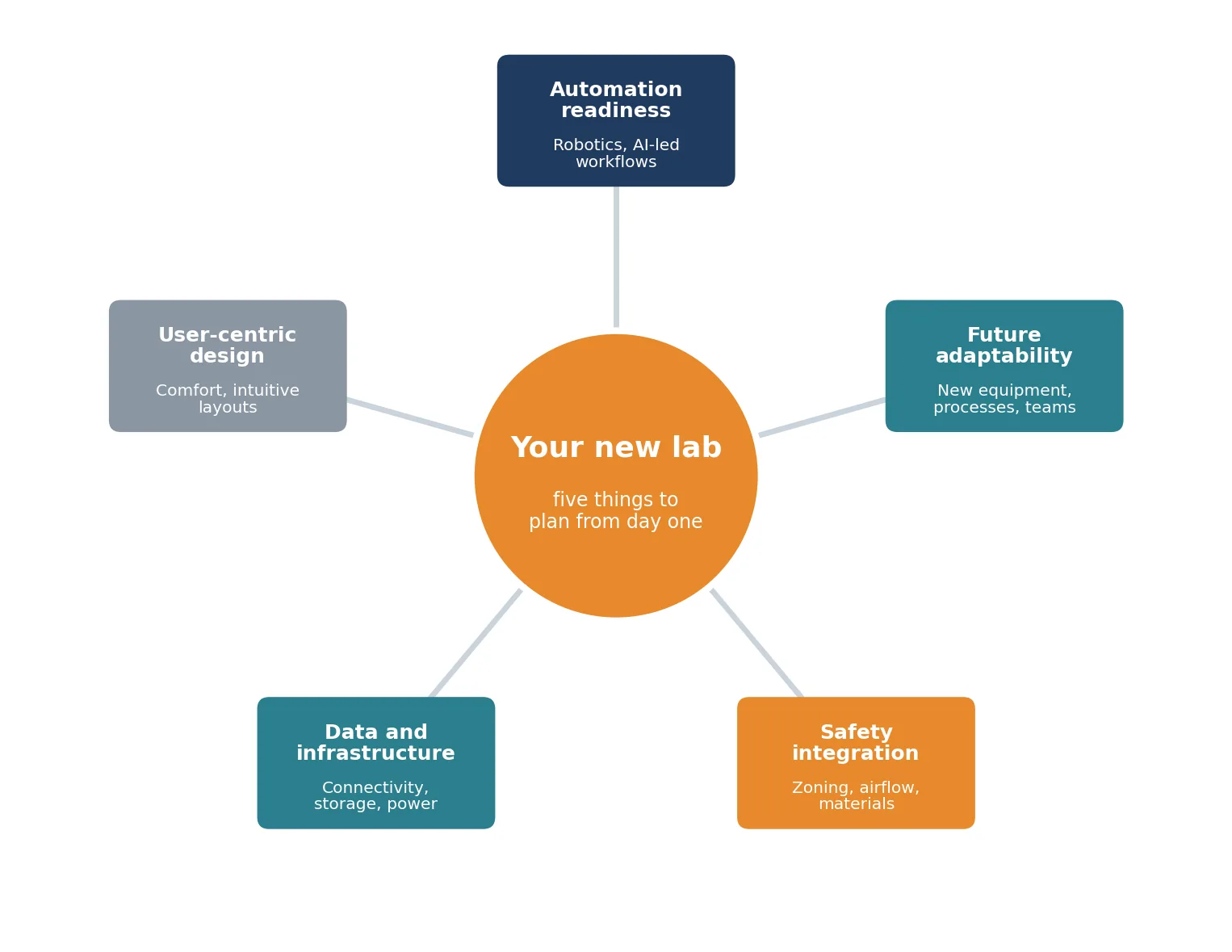
The five considerations
1. Automation readiness
The labs of tomorrow will integrate technology seamlessly. Robotic systems and AI-led workflows are already changing how labs are planned and how services are integrated into them. Automated systems need larger, clear footprints, reliable power and data, capacity for extra heat and, in some cases, floors that can take more weight.
Even if automation is not in your immediate plans, designing with it in mind avoids costly rework when it arrives.
2. Future adaptability
Lab requirements never stay constant. What you design today should be able to evolve with new equipment, new processes and changing team sizes, without needing a complete overhaul. Modular furniture, flexible service distribution and spare capacity in power and data make that possible.
3. Safety integration
Safety decisions made today shape how reliably the lab runs tomorrow. Well-planned zoning, airflow and material choices reduce contamination and hazard risks, and they are far easier to get right in the design than to fix after the lab is built.
4. Data and infrastructure planning
Today's labs run on data as much as on equipment. Strong digital infrastructure, data storage, reliable connectivity and backup power are becoming critical to how labs function. They need to be planned into the building, not added once the walls are up.
5. User-centric design
How your lab feels to use will affect how it performs over time. Intuitive layouts and comfortable working environments help teams work faster, make fewer errors and stay more productive. The best way to achieve this is to involve the people who will use the lab from the start.
At a glance
| Consideration | Why it matters | Plan for |
|---|---|---|
| Automation readiness | Robotics and AI are reshaping lab work | Footprint, power, data, heat loads, floor capacity |
| Future adaptability | Equipment, processes and teams will change | Modular layouts, flexible services, spare capacity |
| Safety integration | Safety is easiest to design in, hardest to retrofit | Hazard zoning, airflow, suitable materials |
| Data and infrastructure | Labs depend on data as much as equipment | Connectivity, storage, backup power |
| User-centric design | Comfort and clarity drive productivity | Intuitive layouts, ergonomics, user input |
Sound familiar?
- The lab was designed around today's equipment, and the next instrument does not fit.
- Network and power points were an afterthought.
- The people who use the lab saw the design only after it was finalised.
These are all planning-stage decisions, and all easier to get right early.
Ask this: Which of these five considerations is the least developed in our current plans?
More than technical infrastructure
Creating a lab is not just about building technical infrastructure. It is about curating a seamless experience for researchers, so they can focus on what matters most: innovation.