
How Can Lab Design Alleviate Technological Challenges in the Lab?
By Arena Consultants · April 30, 2025 · 3 min read
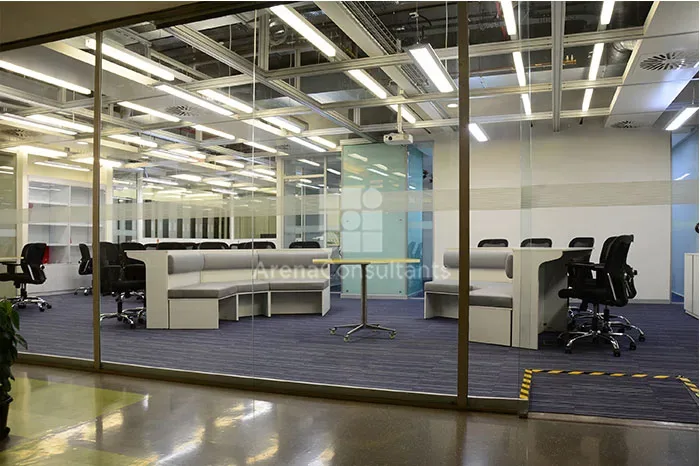
Over more than 20 years of designing laboratories, we have watched technology transform research and development. AI and IoT are now an integral part of lab processes, from automated data analysis to connected sensors that monitor equipment and environments around the clock.
That makes it essential for lab spaces to keep pace. Technology is evolving quickly, and when lab design does not evolve in parallel, the result is friction: tools that do not fit the space, systems that do not work together and expensive equipment that never reaches its potential.
As lab architects, we can play a major role in bridging this gap between innovation and implementation.
The challenges that rigid labs create
When a lab is not designed with technology in mind, three problems tend to appear:
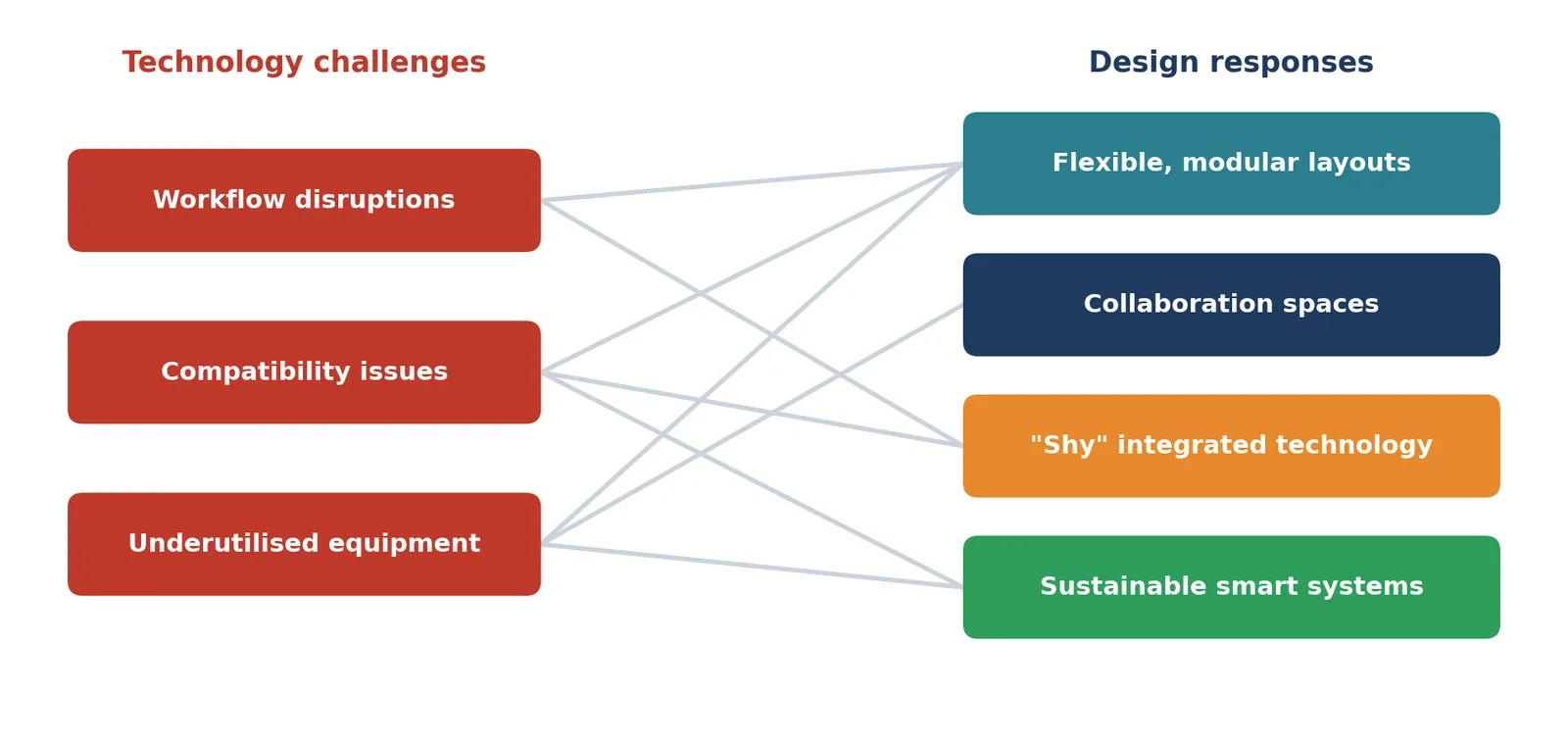
| Challenge | What it looks like | Typical design cause |
|---|---|---|
| Workflow disruptions | New systems interrupt how people work; equipment is in the wrong place; layouts force workarounds | Fixed layouts that cannot adapt to new processes |
| Compatibility issues | New equipment does not fit the space, power, data or service connections available | No spare capacity or flexible service distribution |
| Underutilised equipment | Expensive tools sit idle because they are hard to reach, share or integrate | Poor placement, little space for collaboration around shared tools |
Sound familiar?
- A new instrument arrived and needed electrical work before it could be switched on.
- Every layout change means calling in a contractor.
- Screens and cables have taken over the benches.
A costly system is barely used because it sits in an awkward corner.
From facilitator to enabler: four design responses
Lab designers can do more than accommodate technology. They can actively enable it. Here is how:
1. Flexibility and adaptability in the layout
Modular furniture and movable walls let a lab change shape as research needs evolve, without major construction. Just as important is planning for upgrades that have not happened yet: spare power and data capacity, flexible service routes and space set aside for future equipment. This future-proofing turns new technology from a disruption into a simple addition.
2. Spaces for collaboration
Research is a creative process. Experiments often need controlled, specialised conditions, but the discussions that follow them thrive in more vibrant, open settings. As technology generates more data, teams need places to gather, interpret results together and decide what comes next. Collaboration spaces near the lab, equipped for sharing data on screen, help that happen.
3. "Shy" technology integration
Labs can already be hyper-stimulating environments, full of equipment, alarms and screens. "Shy" technology is technology that does its job quietly, without demanding attention. Integrated data ports, embedded touchscreens and touchless or gesture-controlled interfaces let people interact with digital systems seamlessly, while keeping benches clear and the environment calm.
4. Sustainability and smart technology together
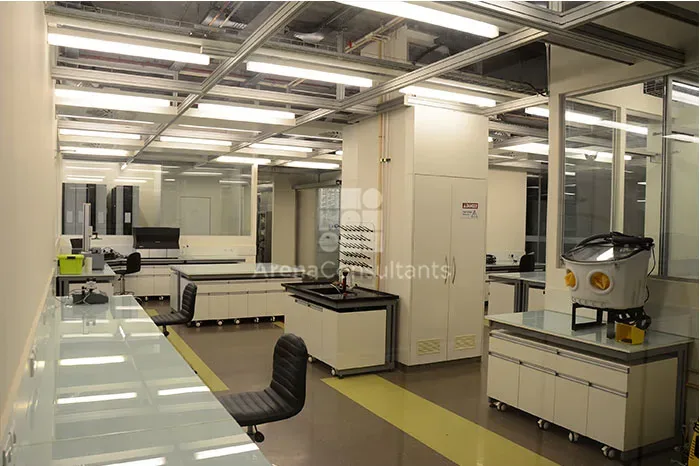
Smart technology and sustainability go hand in hand. Energy-efficient systems, low-impact materials and automated controls, such as ventilation and lighting that respond to real occupancy, help labs save resources while maintaining the precise conditions research needs. Since labs typically use 5 to 10 times more energy per square foot than offices, according to the US National Renewable Energy Laboratory, the savings can be significant.
Try this: List the technologies your lab expects to adopt in the next three to five years. For each one, check whether your space has the power, data, room and flexibility it will need. Every "no" is a design challenge worth solving now.
Ask this: Is our lab designed only for today's equipment, or for the technology we will be using in five years?
Labs as forward-thinking as their technology
Technology will keep evolving, and labs need to evolve with it. When design keeps pace with innovation, labs avoid the disruptions, compatibility problems and wasted investment that rigid spaces create, and research becomes faster, safer and smarter.