
Things About Laboratory Architecture That No One Talks About
By Arena Consultants · November 7, 2024 · 4 min read
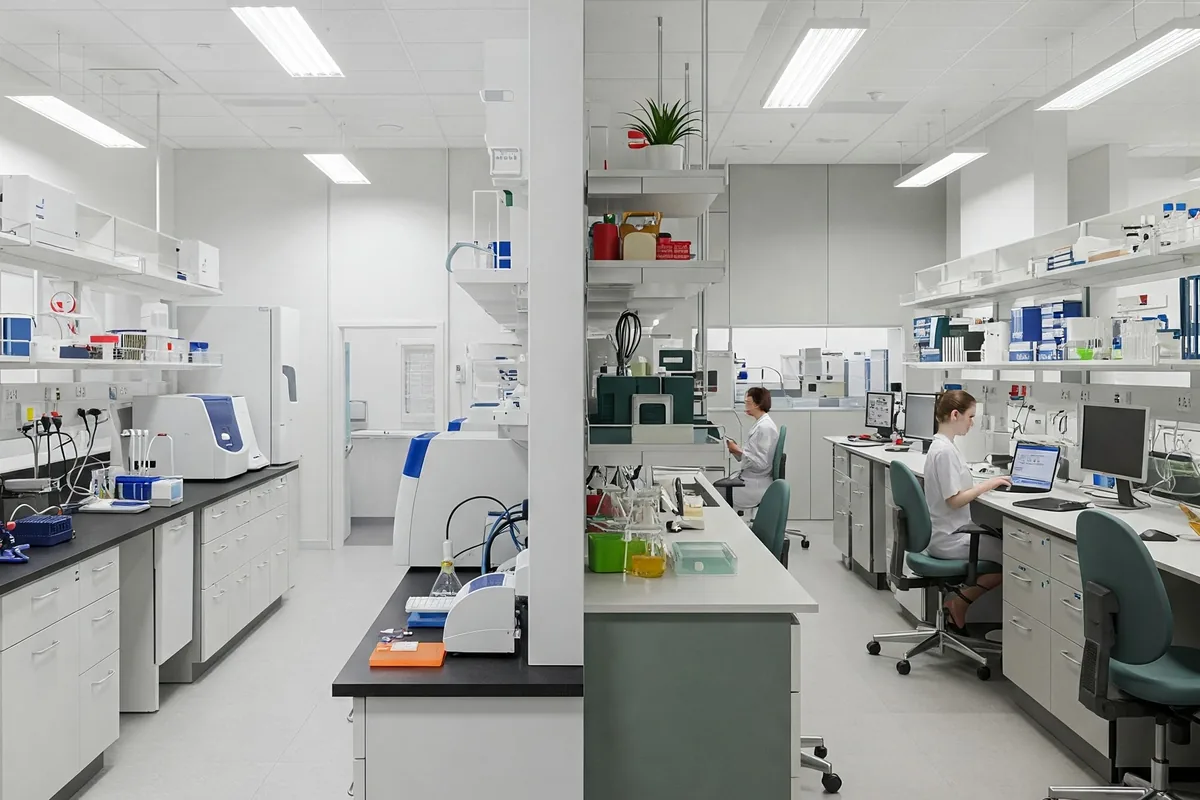
Close your eyes and imagine a laboratory. Chances are you picture something clinical: white walls, rows of workstations, fume hoods and equipment, and not much else.
Very few people picture a lab as a vibrant, creative space. Yet that is exactly what it is. Labs are where ideas are tested, problems are solved and discoveries are made. The people inside them spend long hours thinking, experimenting and collaborating.
The technical side of lab design, the services, safety systems and equipment, rightly gets a lot of attention. But it is only the visible tip of the iceberg. Beneath it sit the aspects that shape how a lab actually feels and performs, and these are the things no one talks about.
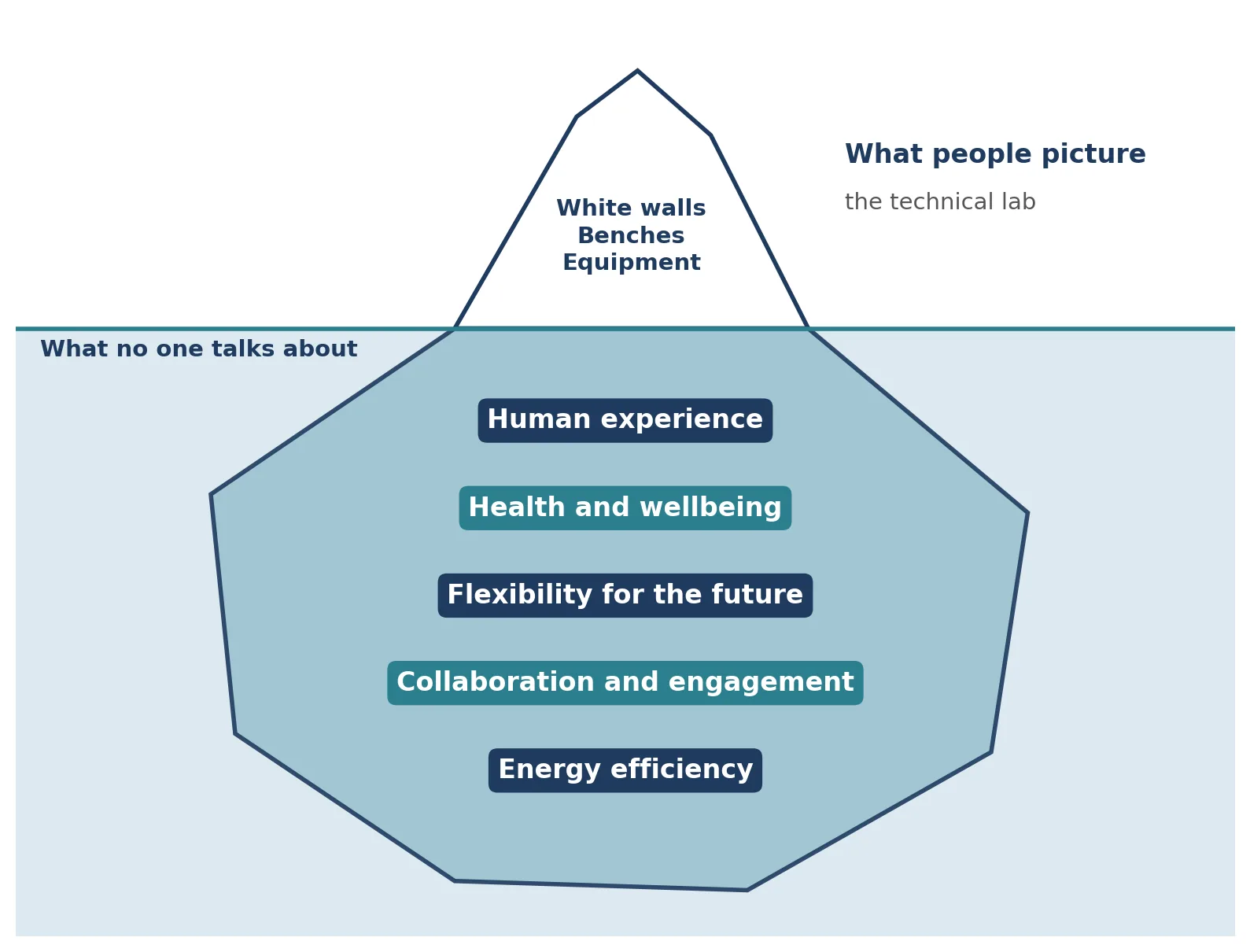
Five things no one talks about
When we design laboratories at Arena Consultants, we consider the technical needs of the space alongside five aspects that are just as important to how a lab performs.
1. Human experience
A lab's design affects how people think, interact and carry out their work. A confusing layout creates friction every day. A well-planned one makes work feel natural.
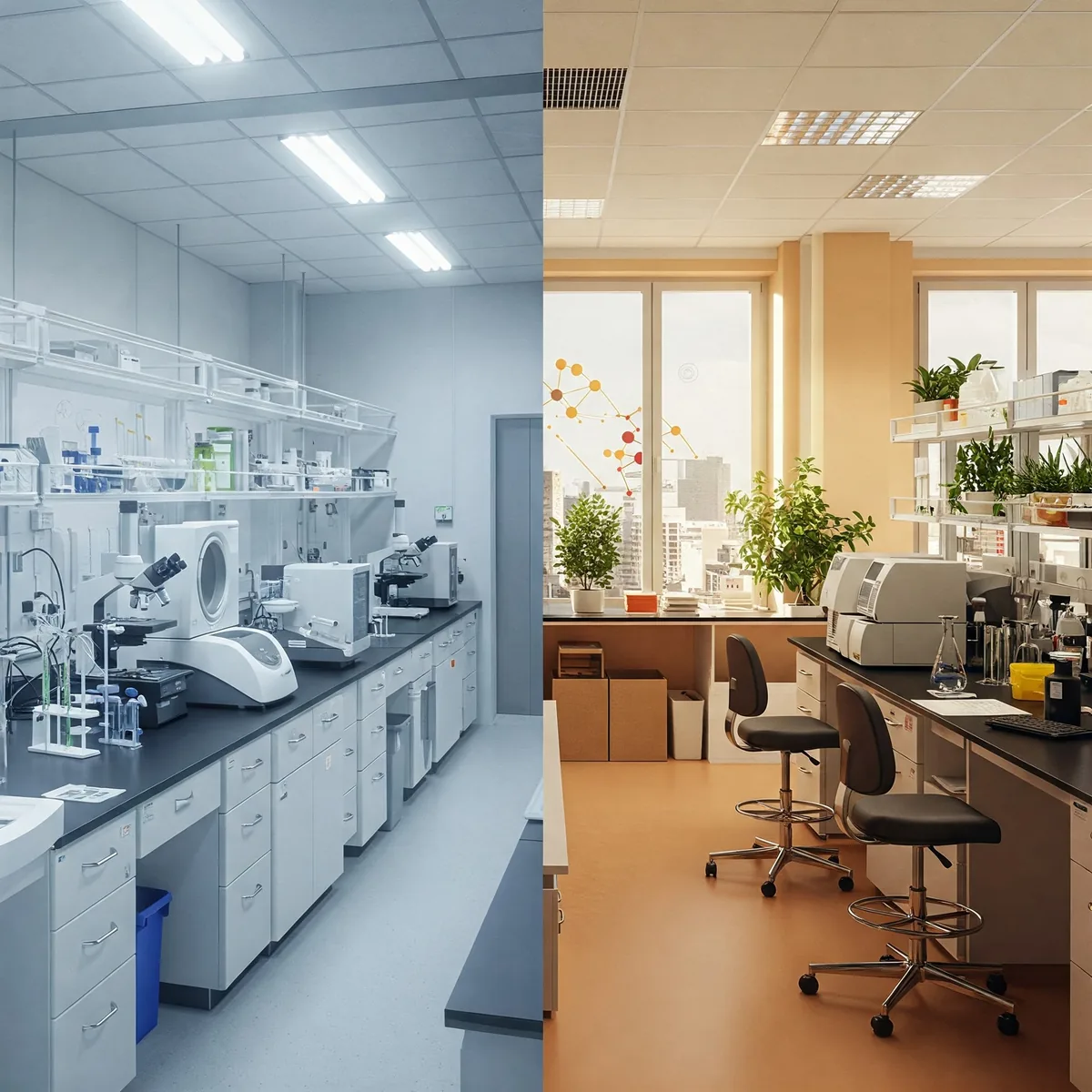
Thoughtful spatial planning, natural light and intuitive layouts create an environment that supports focus and collaboration. Small decisions add up: clear sightlines, logical routes between related tasks, views to the outside and a considered use of colour all shape how people feel in the space.
2. User health and wellbeing
Scientists spend long hours in labs, often working with hazardous materials. Their health and comfort depend on the design as much as on safety procedures.
- Ventilation removes hazards and keeps air fresh. Air quality also affects how well people think: a Harvard study of office workers found cognitive function scores were 61% higher in well-ventilated, low-pollutant "green" conditions than in conventional ones.
- Ergonomic workstations with the right heights and reach distances reduce strain over long hours at the bench.
- Noise control matters in labs full of fans, pumps and instruments, where constant background noise can be tiring and distracting.
3. Flexibility for future adaptation
Science is constantly evolving, and labs need to keep up. A lab designed only for today's equipment and methods may struggle within a few years.
Modular workstations, adaptable service infrastructure and reconfigurable layouts allow a lab to change with its research, without major construction every time priorities shift.
4. Collaboration and engagement
The best discoveries rarely happen in isolation. Many breakthroughs start with a conversation between colleagues, often from different teams.
Well-placed discussion areas, writable walls and informal meeting zones encourage people to share ideas. Placing these spaces where routes naturally cross, near the lab but outside its hazard zones, makes casual conversations more likely to happen.
5. Energy efficiency for long-term sustainability
Labs are among the most energy-intensive buildings. According to the US National Renewable Energy Laboratory, they typically use 5 to 10 times more energy per square foot than offices, mostly to run ventilation.
Smart design choices, such as efficient HVAC systems, optimised lighting and sustainable materials, can reduce a lab's environmental impact and running costs without compromising performance or safety.
Reinventing the image of the lab
| The traditional image | A lab designed with mindfulness | |
|---|---|---|
| Feel | Clinical, white and uniform | Bright, considered and engaging |
| Layout | Built around equipment | Built around people and their workflows |
| Health | Safety systems only | Safety plus comfort, air quality and ergonomics |
| Change | Fixed for years | Designed to adapt as research evolves |
| Collaboration | Left to chance | Planned into the space |
| Energy | An unavoidable cost | Actively designed down |
Sound familiar?
- Your lab works, but nobody would describe it as inspiring.
- Researchers hold discussions in the corridor because there is nowhere else to talk.
- Every new instrument means moving benches and calling in contractors.
Your energy bills keep rising with no clear plan to bring them down.
Try this: Spend ten minutes in your lab simply watching. Where do people pause, gather, struggle or work around the space? Those moments reveal the human side of your lab that no technical drawing shows.
Designing labs with the mindfulness they deserve
It is time to reinvent the traditional image of laboratory spaces. Labs are where some of the most important work in the world happens, and the people doing it deserve spaces designed with as much care as the science itself.
When human experience, wellbeing, flexibility, collaboration and sustainability are designed in from the start, labs become more than technical spaces. They become places where people want to work, and where great ideas have room to grow.