
The Role of Ergonomics in Modern Laboratory Design
By Arena Consultants · July 7, 2026 · 4 min read
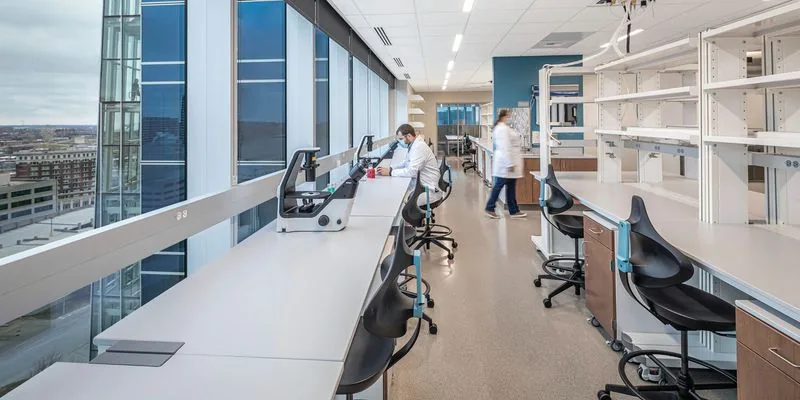
A good laboratory design enables research and innovation. But at its core, a lab has to serve the scientists conducting the experiments. It should give them a healthy, comfortable working environment so they can focus fully on the task at hand.
That is where ergonomics comes in. And in labs, ergonomics matters even more than in most workplaces, because lab work combines long hours, precise movements and repetitive tasks in ways few other jobs do.
What is ergonomics in laboratory design?
Ergonomics in lab design is the thoughtful arrangement of furniture, equipment and workstations to suit the physical needs of the people who use them. The aim is to reduce strain and support efficiency by minimising repetitive motions, awkward postures and unnecessary physical effort.
It is not just about comfort. The US Occupational Safety and Health Administration (OSHA) warns that lab workers are at risk of repetitive motion injuries during routine procedures such as pipetting, working at microscopes, operating microtomes, using cell counters and working at computers. OSHA also notes that awkward positions at fume hoods and biosafety cabinets can cause problems.
Why lab ergonomics is different
Office ergonomics usually focuses on a desk, a chair and a screen. Labs have a much wider range of tasks, each with its own risks, and each needing its own design response:
| Lab task | Ergonomic risk | Design response |
|---|---|---|
| Pipetting | Repetitive thumb, wrist and shoulder strain | Work surfaces at the right height, arm support, room for electronic pipettes |
| Microscopy | Neck, back and eye strain from fixed postures | Adjustable seating and surfaces, good leg room, controlled lighting |
| Fume hood and biosafety cabinet work | Reaching, arm fatigue, awkward neck angles | Correct working heights, knee space where seated, controls within easy reach |
| Long periods standing at benches | Leg, foot and back fatigue | Chemical-resistant anti-fatigue flooring or mats, sit-stand options |
| Lifting and storing supplies | Back injuries from bending and overhead lifting | Heavy items stored low, frequently used items within reach |
| Data entry and analysis | Wrist, neck and eye strain | Proper write-up desks away from wet benches |
Sound familiar?
- Researchers stack boxes to raise their work surface, or sit on whatever stool is nearby.
- People wince when they reach into the back of a fume hood.
- Heavy reagent bottles are kept on high shelves.
Every one of these is a design problem, and every one is preventable.
5 key ergonomic considerations in laboratory design
1. Workstation layout
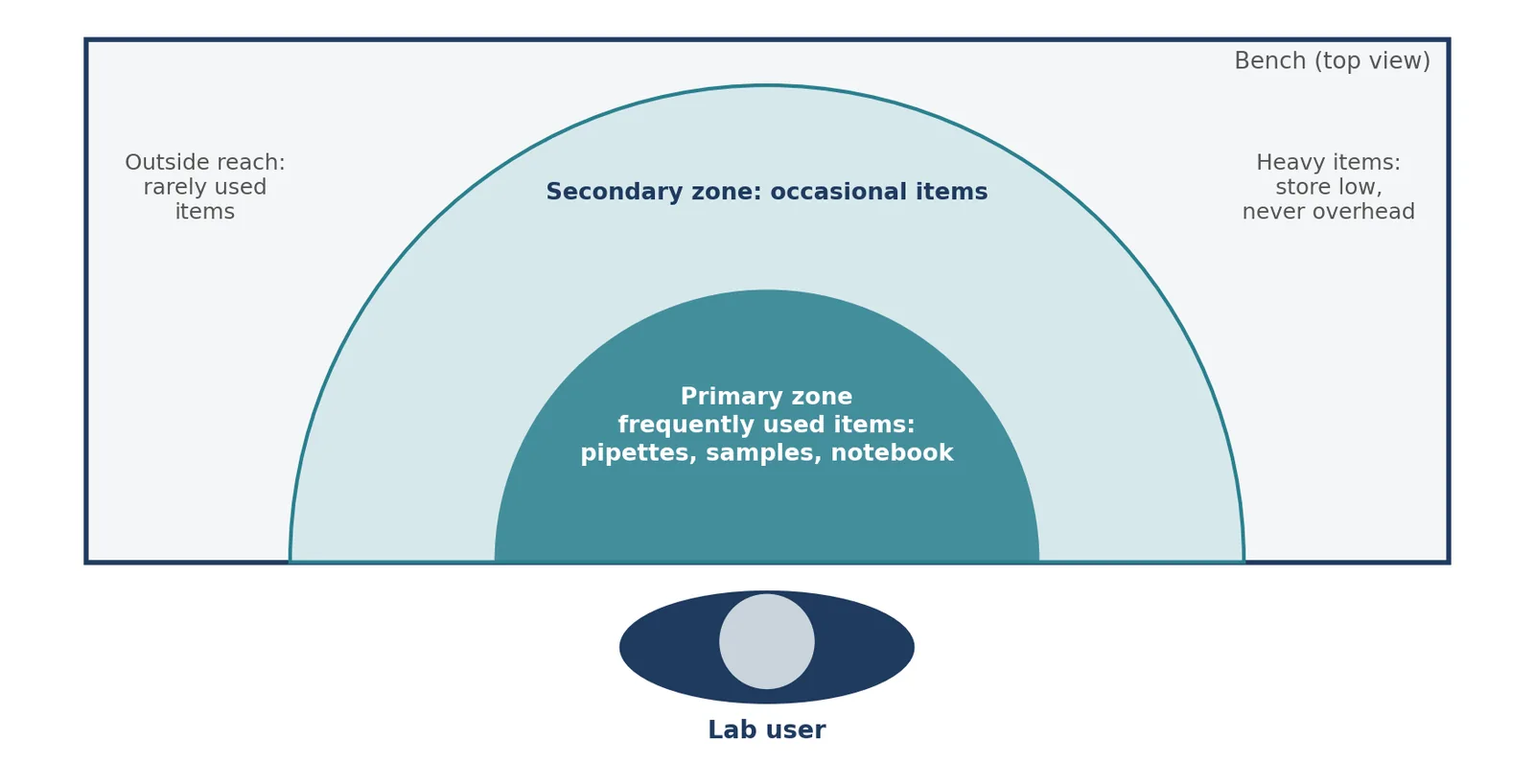
The placement of workstations shapes how people move and work throughout the lab. Ergonomically designed workstations keep tools, equipment and materials within easy reach, so users are not constantly stretching, twisting or walking back and forth.
Just as important is matching the bench to the task. Some lab work is done sitting, much of it is done standing, and the right bench height is different for each. Adjustable work surfaces, used where they add the most value, let users set the height that keeps their posture and alignment comfortable.
2. Seating and mobility
Seated lab tasks, such as microscopy and data analysis, need chairs or stools with adjustable height and good back support to maintain posture over long periods. At standing-height benches, stools with foot rings or footrests let users sit without dangling their legs.
Lab seating also has to suit the lab environment. Upholstery should be chemical-resistant and easy to clean, rather than fabric. Mobility is useful for moving between tasks, but casters need to be chosen carefully in areas with chemicals, glassware or spill risks.
3. Storage solutions
Ergonomic storage keeps frequently used items within easy reach, so workers do not need to stretch or bend awkwardly. Cabinets and drawers should sit at comfortable heights, and heavy items should go on lower shelves to prevent lifting injuries. Good storage also improves efficiency, because people can quickly find and reach the materials they need.
4. Lighting and visibility
Good lighting reduces eye strain and makes precise work easier. Lab lighting should avoid glare and provide the right level of light for each task. Adjustable task lighting supports precision work, while ambient lighting provides even overall visibility.
Natural light adds to comfort and can reduce eye fatigue, but it needs to be balanced against glare on screens and work surfaces.
5. Equipment design and accessibility
Instruments and devices should be positioned at the right height and within easy reach, so they can be used without awkward postures. Controls, sinks and emergency equipment such as eyewash stations should be accessible to every user. Equipment should also be easy to operate and maintain, and adjustable equipment helps support both comfort and accuracy.
Try this: Watch one person carry out a routine procedure from start to finish. Count how many times they reach, bend, twist or walk. Each of those movements is an opportunity for better design.
Ask this: Which tasks in our lab are done sitting and which standing, and have our bench heights been designed for each?
The future of lab ergonomics
Ergonomics will only become more central to lab design. Smart, adjustable workstations, more personalised settings and a growing focus on both physical and mental wellbeing are shaping healthier, more adaptive labs.
Investing in ergonomics is not only a commitment to user safety. It is a strategic choice that supports performance, reduces downtime and helps keep laboratories at the forefront of innovation and efficiency.