
How Is Technology Viewed in Indian Labs?
By Arena Consultants · September 8, 2026 · 4 min read
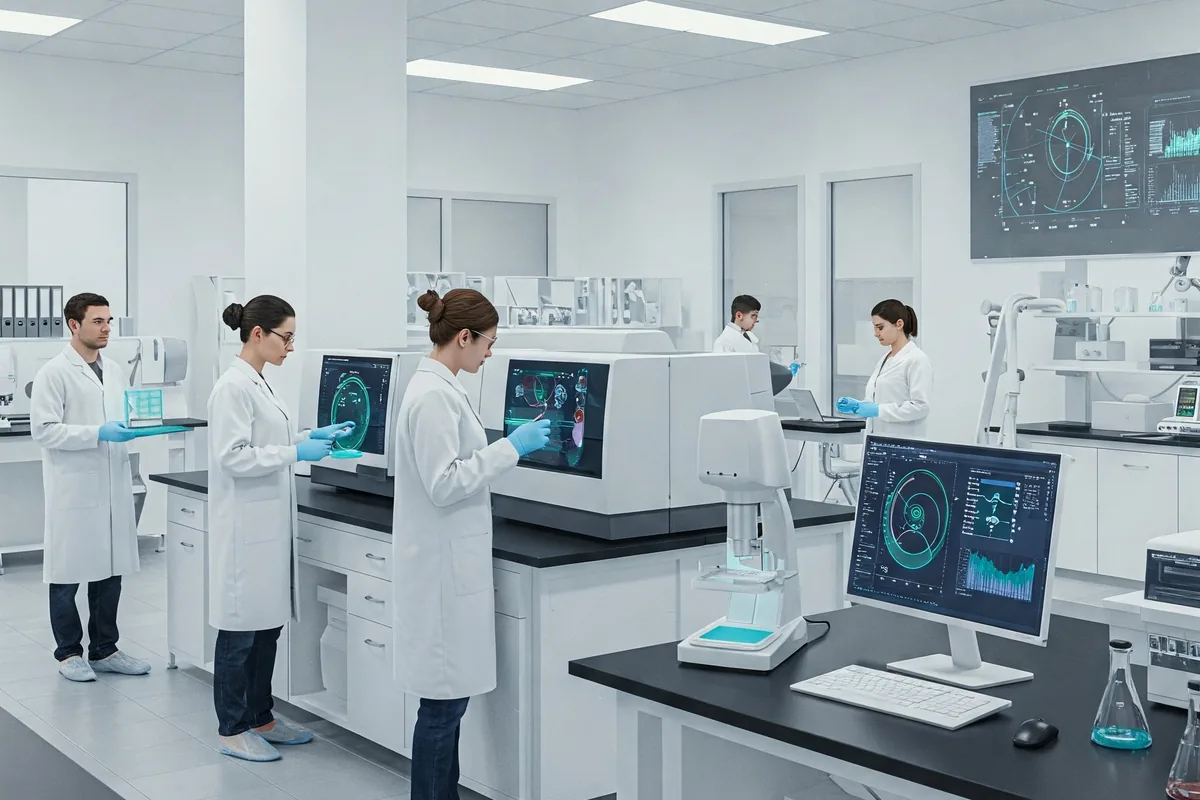
In our conversations with lab users across India, one pattern keeps coming up. Many people are still hesitant to embrace technology in their everyday workflows.
Processes such as data entry, sample tracking and equipment logs, which could easily be handled with digital tools, are still often done by hand. The tools exist. The infrastructure is increasingly available. Yet the shift does not happen.
This is not a technology problem. It is a human one, and understanding it is the first step to solving it.
Why the disconnect happens
Hesitation about technology is understandable. In our experience, it usually comes from a few sources:
- Comfort with traditional methods. Manual processes are familiar, trusted and proven. Changing them feels like a risk, especially when the current way "works."
- Fear of change. New systems bring uncertainty: about making mistakes, losing data or looking less capable while learning.
- Lack of training. Tools are often introduced without enough support, leaving people to work things out alone.
- A steep learning curve. When labs are already busy, finding time to learn a new system can feel impossible.
- Practical concerns. In regulated labs, people worry about data integrity and validation. Elsewhere, unreliable power or connectivity can make digital tools feel less dependable than paper.
Every one of these concerns is reasonable. And every one of them can be addressed.
| Concern | What helps |
|---|---|
| "The manual way works fine." | Start with one task where the time saving is obvious, so the benefit is visible quickly |
| "What if I make a mistake?" | Run digital and manual side by side for a short period, until people trust the new system |
| "Nobody showed us how to use it." | Hands-on training, simple guides and a named go-to person for questions |
| "We do not have time to learn." | Introduce one tool at a time, during quieter periods |
| "Will the data be secure and compliant?" | Involve quality and IT teams early, and choose systems that meet data integrity requirements |
| "What if the power or network fails?" | Plan backup power and reliable connectivity into the lab's infrastructure |
Sound familiar?
- A digital system was bought, but people still keep the paper log "just in case."
- Only one person in the team knows how a new tool works.
- Data is written by hand and then typed into a spreadsheet later.
Each of these is a sign of a tech disconnect, not a technology failure.
What technology gives back
Many people do not realise how much embracing technology can help in the longer run. Done well, it can:
- Simplify tasks by removing repetitive data entry and duplicate record-keeping.
- Automate routine work, such as monitoring and logging, so it happens reliably without anyone remembering to do it.
- Build efficient systems where information is accurate, searchable and available when it is needed.
- Bring resilience, speed, safety and scalability to lab work from day one.

Start small: one step at a time
If you are unsure where to begin, you do not need to overhaul everything overnight. The most successful labs build confidence gradually:
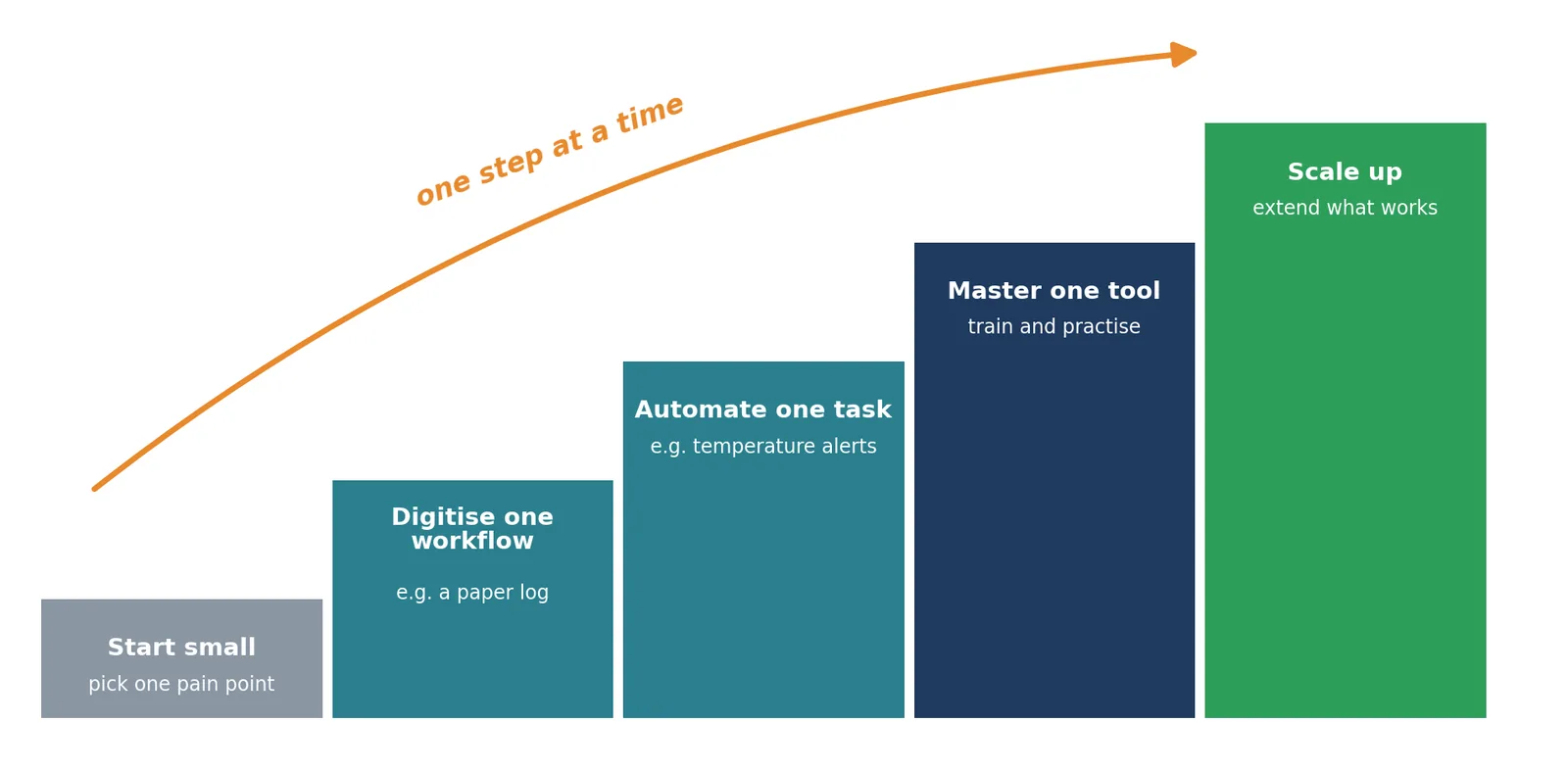
1. Start small
Pick one pain point that everyone recognises, such as a time-consuming log or a recurring stock shortage.
2. Digitise one workflow
Move one paper-based process into a digital format, and let the team see the difference for themselves.
3. Automate one manual task
Choose a repetitive job, such as temperature monitoring, and let a system handle it, with alerts when something needs attention.
4. Get comfortable with one new tool at a time
Train people properly, give them time to practise and make sure someone is available to help.
5. Scale up
Once the first steps are in place and trusted, extending them to other workflows becomes much easier. And suddenly, your lab is not just functioning, it is evolving.
Try this: Ask your team: "Which manual task would you most like to never do again?" Start your digital journey with the most popular answer. People adopt technology faster when it solves a problem they already feel.
How lab design supports the connection
Lab design plays a quiet but important role in technology adoption. Reliable power and backup, strong connectivity throughout the lab, data points where people actually work and a space for training all make new tools easier to trust and use. When the infrastructure is dependable, people are far more willing to let go of paper.
Ask this: Is our team hesitant about technology itself, or about the support, training and infrastructure around it?
Smarter labs, one step at a time
The disconnect between lab users and technology is real, but it is not permanent. With patience, the right support and a lab designed to make digital tools dependable, every team can make the shift at its own pace.
Let us make our labs smarter, one step at a time.