
Mental and Intellectual Impact of Technology in Research Labs
By Arena Consultants · October 18, 2025 · 4 min read
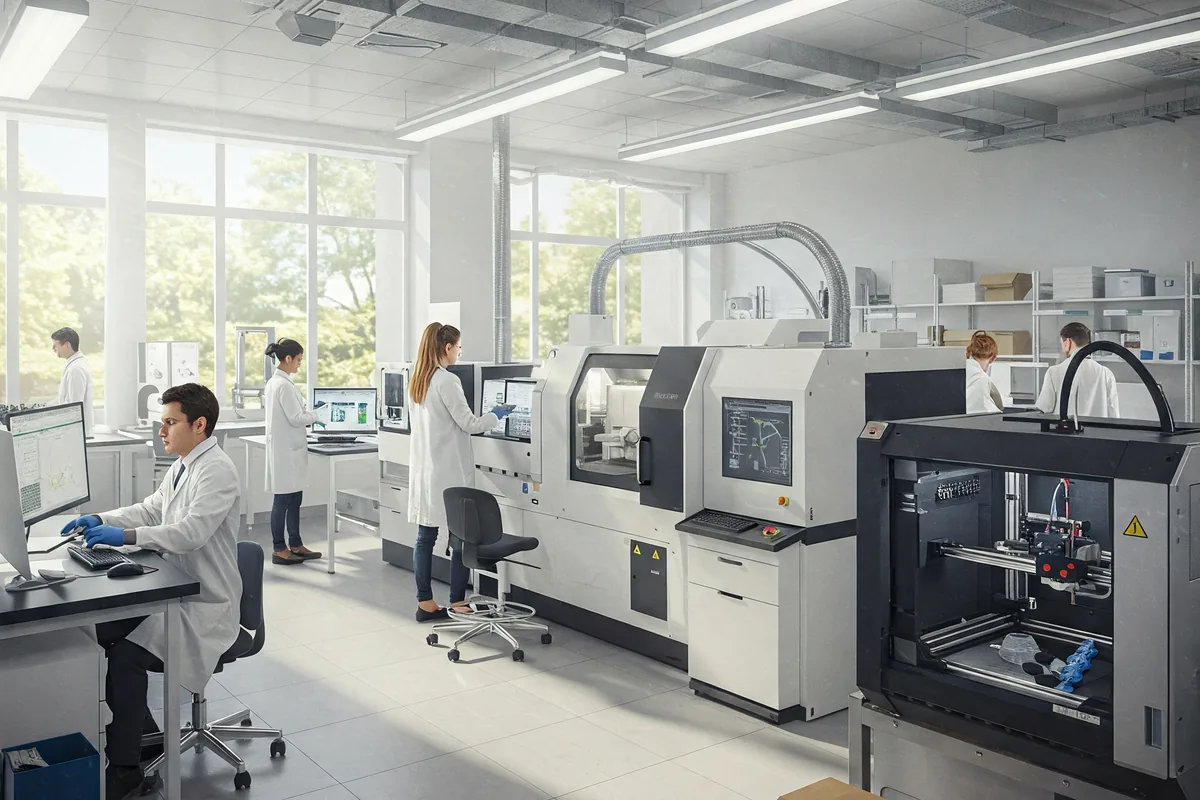
In research environments, technology has raised the bar for innovation. New-age tools such as automation, 3D printing and machine learning are helping scientists produce more precise results, accelerate discovery and experiment more efficiently. The result has been faster breakthroughs and a new benchmark for productivity and performance in labs.
At the same time, we spend a large part of our lives at work. Gettysburg College estimates that the average person spends around one third of their life at work. For scientists, much of that time is spent in the lab. So as labs become more technology-driven, a question matters more than ever: how is all this technology affecting the people who use it?
The positive impact of technology on lab users
First, the good news. Technology has made a real, positive difference to everyday lab work. Here is what we have observed:
1. Automation saves time on repetitive tasks
Robotic systems and automated instruments now handle many repetitive, manual jobs such as sample handling and pipetting. That frees scientists to focus on higher-value work like experimental design and analysis, reduces the physical strain of repetitive motions, and keeps people further from hazardous materials.
2. AI and analytics improve decision-making
AI tools and analytics help scientists process large datasets, spot patterns and reach conclusions faster and more accurately than manual methods allow.
3. Remote access and digital controls add flexibility
Many instruments can now be monitored and controlled remotely. Scientists can check on long experiments, adjust settings or receive results without being physically present, which makes lab work more flexible and less tied to fixed hours.
4. Smart sensors make labs safer
Connected sensors continuously monitor air quality, temperature, equipment performance and safety systems, alerting teams the moment something drifts out of range. Labs are safer and better controlled as a result.
The flip side: when labs feel more mechanical than human
The benefits are real. But technology also changes how a lab feels to work in. When a lab is designed around machines and operational logic alone, it can start to feel more mechanical than human, and the very people it was built for can feel the strain:
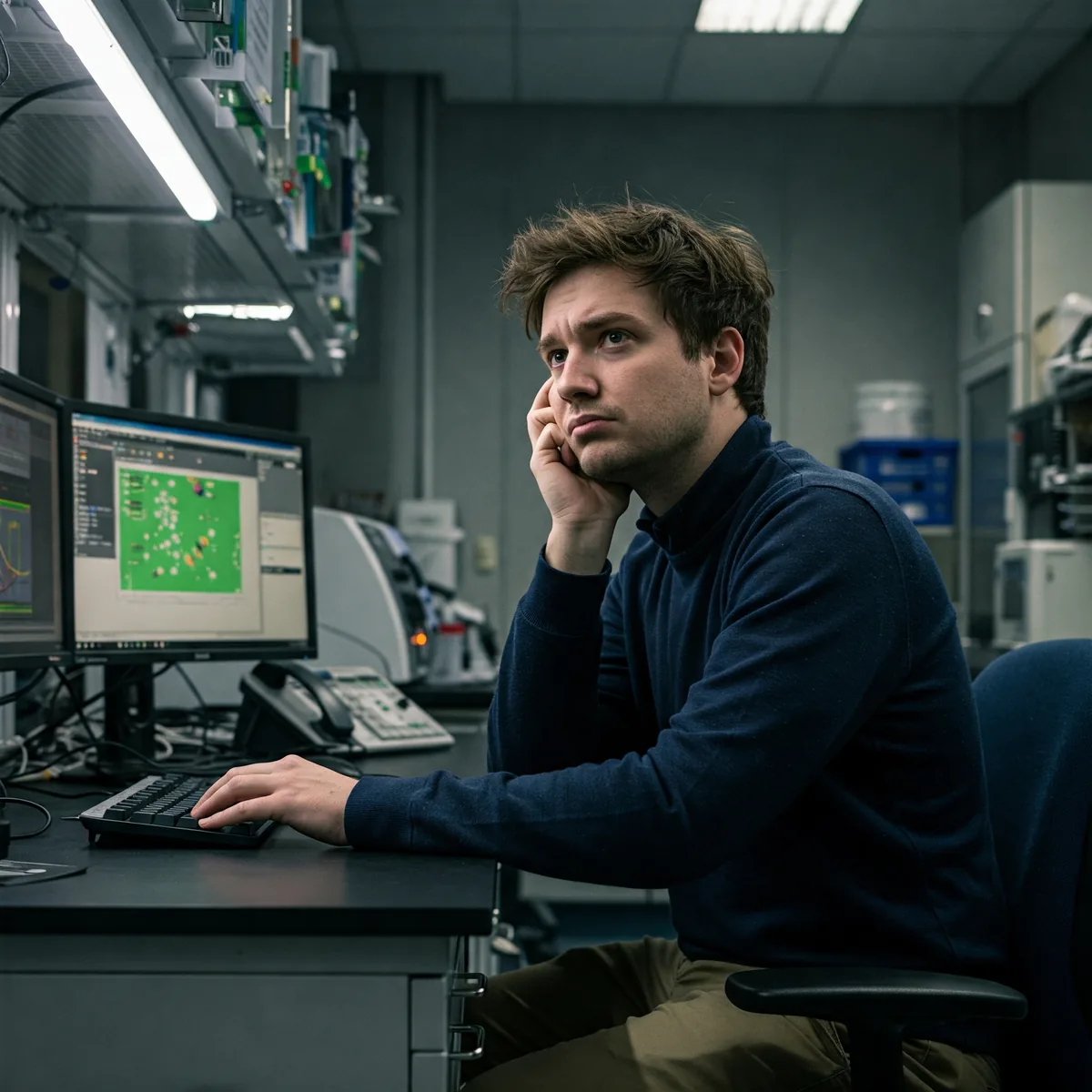
- Cognitive fatigue. Constant alerts, notifications and data streams compete for attention and can wear people down.
- Isolation. Screen-based workflows can keep people apart, eroding the energy and informal conversation that make teams work.
- Pressure to keep pace. When machines run around the clock, people can feel pushed to "perform like the tech," which can contribute to burnout.
- Expanding roles. Many scientists now juggle bench work with coding and data analysis, adding new demands to already full days.
- Sterile environments. Spaces designed purely for equipment can lack sensory variety, leaving them feeling flat and uninspiring.
None of this is an argument against technology. Tech integration is non-negotiable in today's digital world. It is an argument for designing labs where technology and people both thrive.
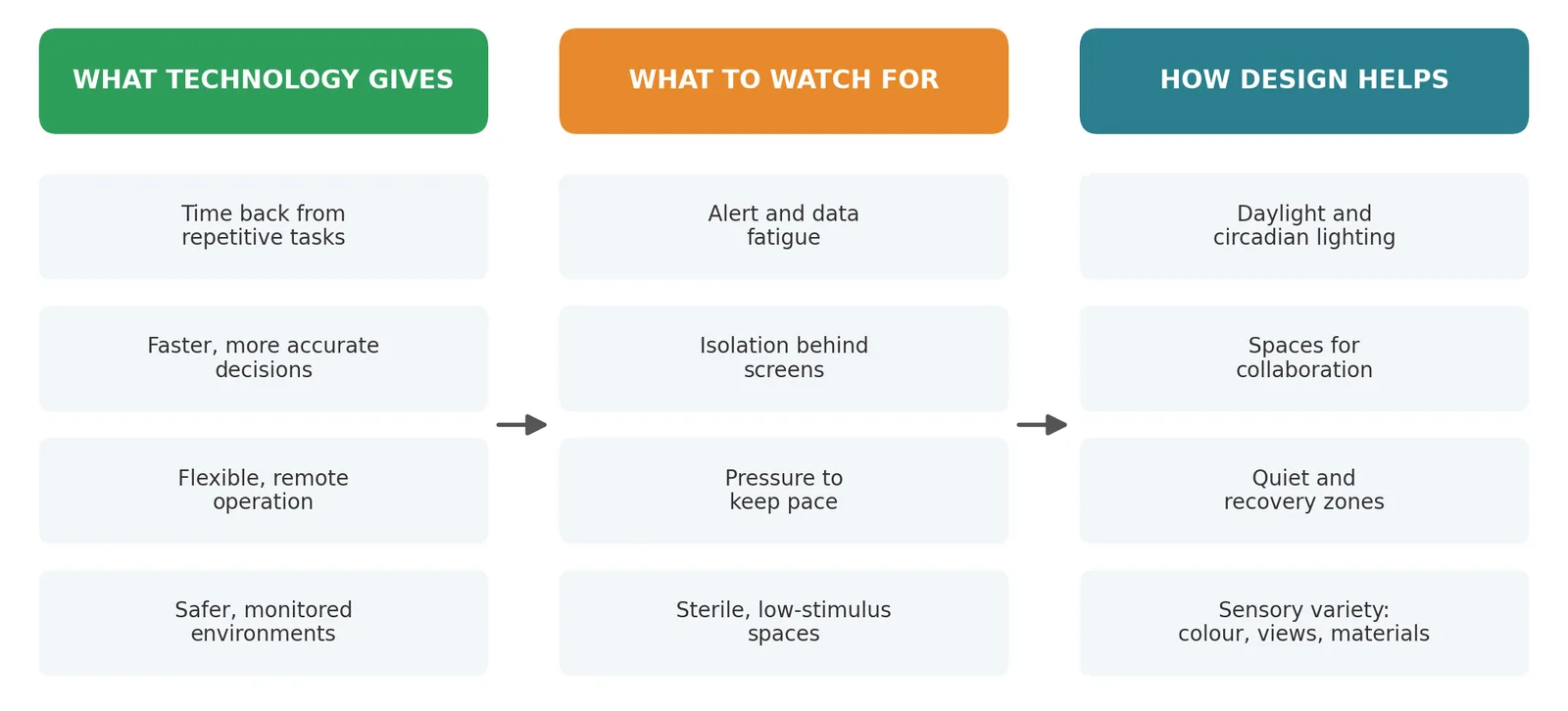
How lab design can help people thrive with technology
Technology was always meant to support human growth, not get in its way. This is where lab architects can play an important part. Thoughtful design interventions can make a real difference to how lab users think, feel and thrive alongside technology:
- Access to daylight and views. Natural light and views to the outside help counter the screen-heavy nature of modern lab work.
- Circadian lighting. Lighting that changes in intensity and colour through the day, following natural daylight patterns, can support alertness and comfort during long hours indoors.
- Spaces for collaboration. Write-up areas, meeting points and breakout spaces close to the lab bring people out from behind their screens and back into conversation.
- Quiet and recovery zones. Places to step away from alerts and data streams give people a chance to reset.
- Sensory variety. Considered use of colour, materials, texture and greenery makes tech-heavy spaces feel human again.
- Well-designed data work areas. As coding and analysis become part of the job, comfortable, ergonomic dry-lab and write-up spaces matter as much as the bench.
Sound familiar?
- Your team spends most of the day looking at screens.
- Alerts and notifications never seem to stop.
- People rarely talk outside scheduled meetings.
The lab is highly advanced, but nobody would call it a pleasant place to be.
Try this: Ask your team two questions: "Which technology has made your work easier?" and "What about working here drains your energy?" The first shows what to build on. The second shows where design can help.
Ask this: As we add more technology to our lab, what are we adding for the people who work alongside it?
Technology and people, in balance
Technology has transformed what labs can achieve, and it will keep doing so. The labs that make the most of it will be those designed to support both the science and the scientists: efficient, connected and smart, but also healthy, social and human.