
The Biggest Challenge in Lab Design: Getting the Right Brief
By Arena Consultants · August 18, 2026 · 5 min read
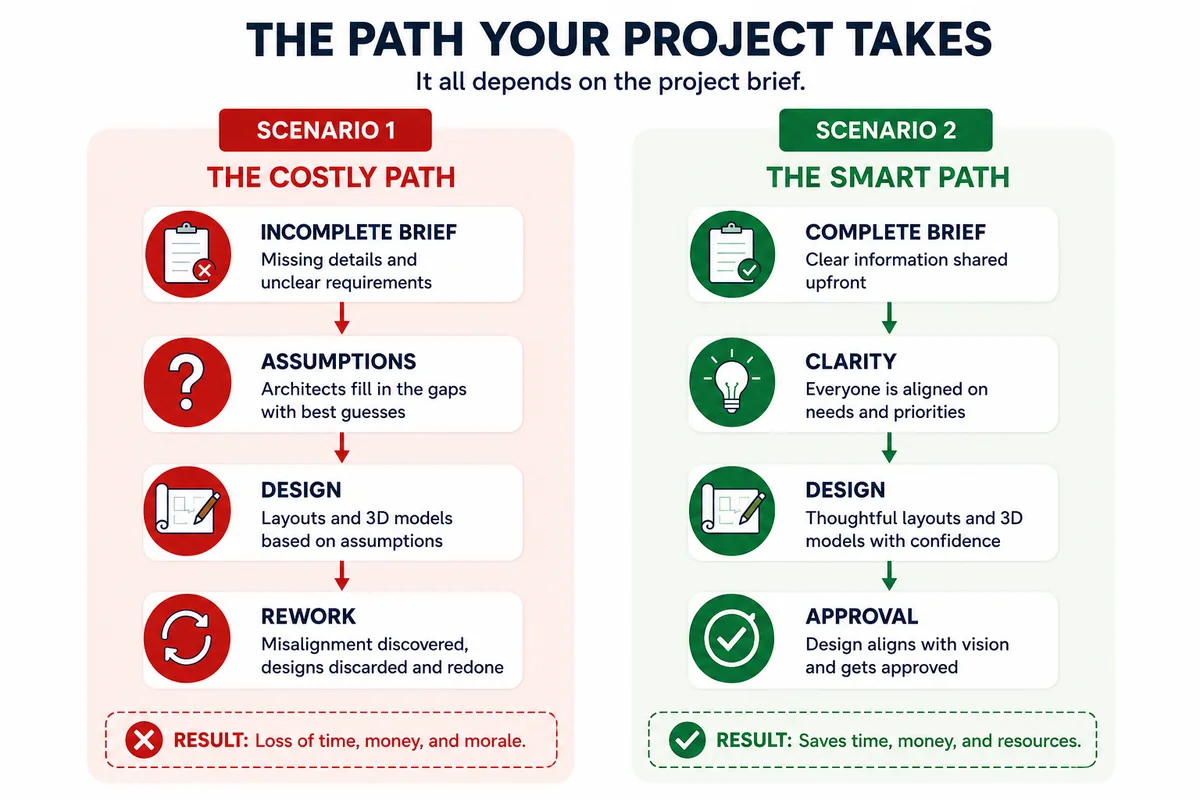
Ask any lab architect what the hardest part of a project is, and many will give the same answer. It is not the ventilation, the services or the compliance. It is getting a right and complete project brief from the client.
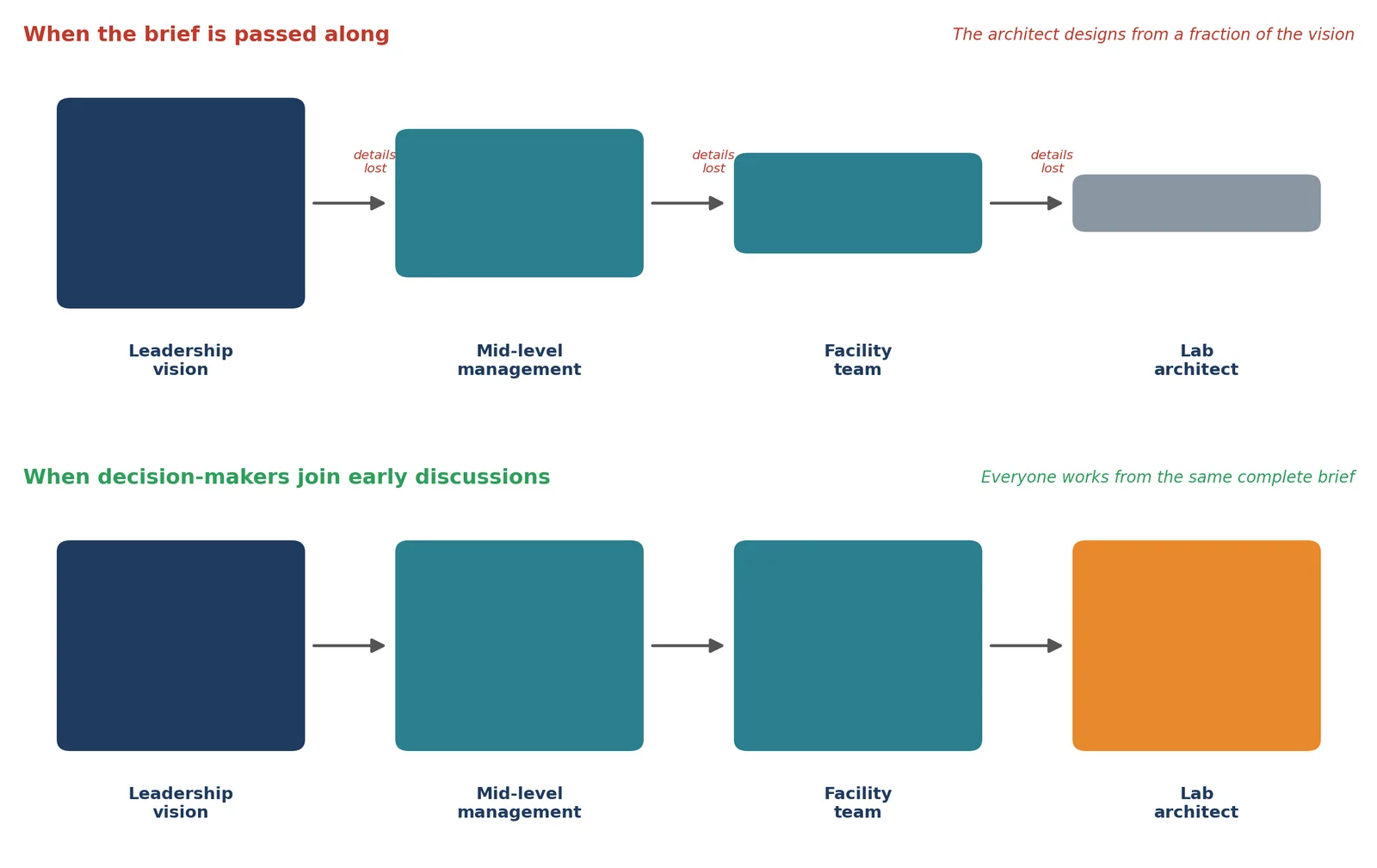
In most cases, facility teams find it difficult to translate their needs into a design brief, which leaves architects to fill in the gaps. And even when clients know exactly what they want, the brief often gets diluted as it passes from person to person.
Either way, the outcome is the same. The architect is left to make assumptions, and assumptions in lab design lead to rework, costing both sides time, money and momentum.
A lesson from one of our international projects
On one international project, the client's leadership had a very clear vision for their new facility. They knew what they wanted it to achieve, how it should feel and where it fitted into the company's future.
But that vision did not reach us in full. Our point of contact was mid-level management, who were juggling many targets and responsibilities of their own. They shared everything they could, but some key points got lost along the way.
We developed layouts and 3D models based on the brief we had. When the designs reached leadership, it became clear they did not match their aspirations. Weeks of design work had to be discarded and redone.
Beyond the lost time, it took a toll on everyone's morale and confidence. Nobody had done anything wrong. The brief had simply been passed along one too many times.
Two ways a brief goes wrong
| The brief is never fully formed | The brief is diluted along the way | |
|---|---|---|
| What happens | The facility team knows there is a need but struggles to put it into design terms | Leadership has a clear vision, but it is passed through people with competing priorities |
| Typical signs | Requirements described as "a lab like our current one, but bigger" | Design feedback from leadership arrives late and changes direction |
| The risk | The architect designs on assumptions | The architect designs to the wrong version of the vision |
| The result | Rework, delays and a lab that does not fit the work | Rework, delays and lost confidence on both sides |
Sound familiar?
- The design brief was a list of rooms and an approximate area.
- The person briefing the architect was not the person approving the design.
- Leadership saw the design for the first time at the final presentation.
Each of these is a warning sign that the brief may not be complete.
What to document before you engage an architect
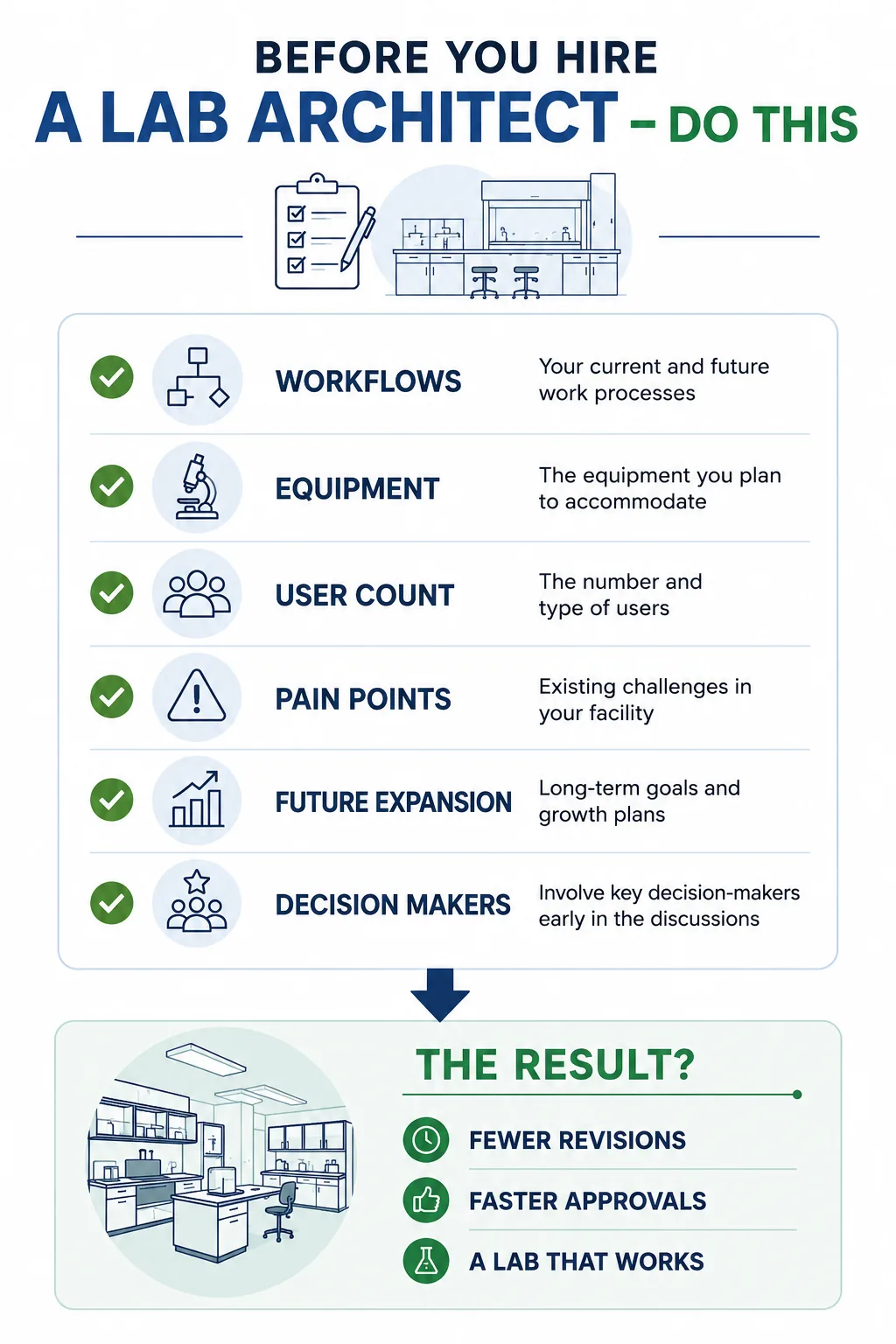
A little preparation at the start of a project avoids most of these problems. If you are a lab manager or facility head, try to document the following before your first meeting with an architect:
| What to document | Why it matters to the design |
|---|---|
| Your current and future workflows | Workflows decide adjacencies, circulation and how rooms connect. Your SOPs are a great starting point. |
| The equipment you plan to accommodate | Equipment sets space, power, data, ventilation, floor loading and service needs. |
| The number and type of users | Headcount and roles shape bench numbers, write-up space, amenities and safety provisions. |
| Existing pain points in your facility | What does not work today is the clearest guide to what the new lab must fix. |
| Long-term goals and expansion plans | Future growth determines how flexible the layout, services and site plan need to be. |
This does not need to be a polished document. A few pages of honest notes, gathered from the people who will use the lab, are worth far more than a perfect report that misses what matters. Your architect can then help shape it into a formal User Requirement Specification (URS).
Try this: Ask three people to describe the new lab in one paragraph: someone from leadership, someone from the facility team and someone who will work at the bench. If the three descriptions differ, your brief is not ready yet.
Most importantly: involve the decision-makers early
The single most effective way to protect your brief is to involve key decision-makers in the early design discussions. We understand that leadership time is precious. But an hour at the start of a project is far more efficient than weeks of corrections later.
In practice, that means:
- A kick-off workshop with leadership present, so the vision is heard first-hand rather than relayed.
- Leadership sign-off on the brief before design work begins.
- A review with decision-makers at concept stage, when changes are quick and cheap, not just at the final presentation.
- One point of contact with the authority to decide, or a clear route to someone who has it.
Ask this: Who in our organisation will approve the final design, and have they been part of writing the brief?
Early alignment beats late correction
Every lab project starts with a brief, and every design decision after that depends on it. When the brief is complete and shared by everyone who matters, architects can design with confidence, and clients get a lab that matches their vision the first time.
A few hours of preparation at the start can save weeks of rework later. It is one of the simplest and most valuable investments in any lab project.