
The Design Brief: The Most Crucial Part of a Lab Project
By Arena Consultants · November 22, 2024 · 5 min read
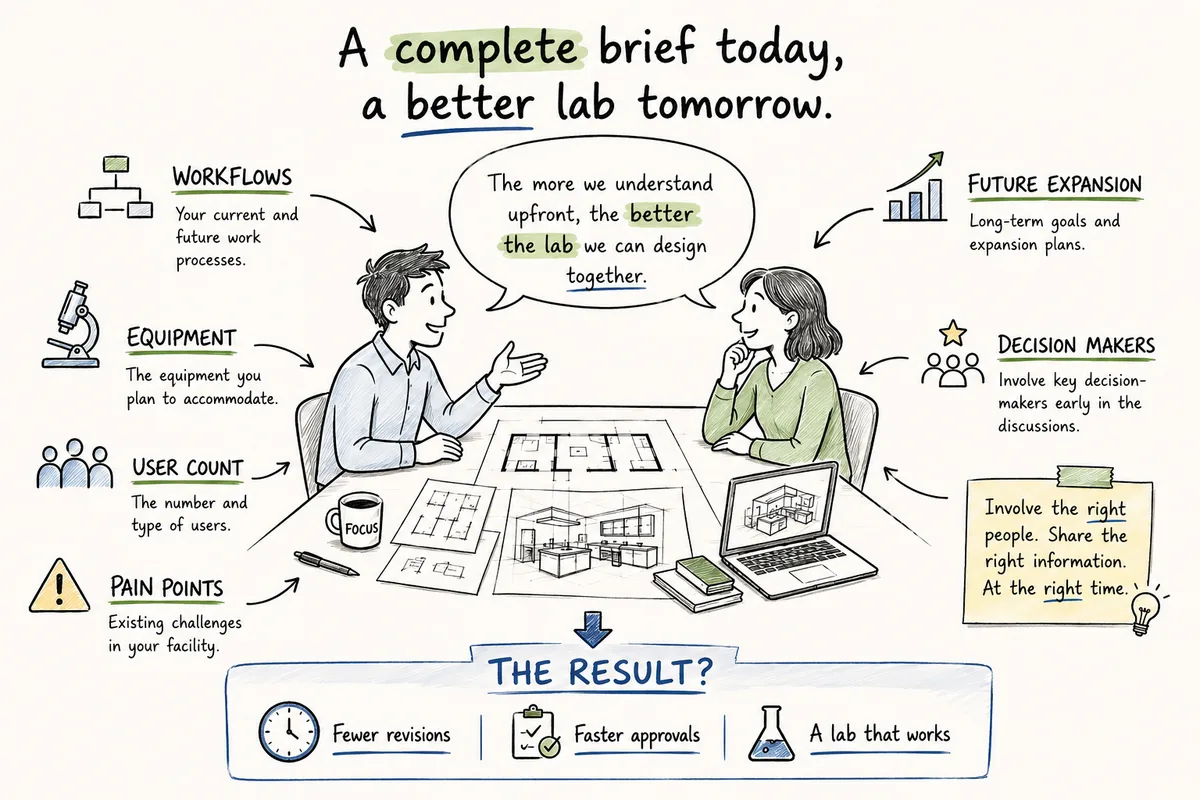
Ask what the most crucial part of a lab design project is, and most people will point to the layout, the services or the equipment. In our experience, it is something that happens before any of those: creating the design brief.
The brief determines how well the whole project is executed. It ensures that everyone, from leadership to the design team, is working towards the same objectives from the very beginning. Get it right, and every later decision has a clear foundation. Get it wrong, and even the best design work is built on guesswork.
Diagnosis before prescription
Think about the last time you visited a doctor. They did not prescribe medication the moment you walked in. They asked about your symptoms, your medical history and the challenges you were facing, and only then suggested a treatment.
A lawyer works the same way. Before advising you, they listen to the dispute, the facts and what you want to achieve.
Architecture and design are no different. Lab design is a consultative field. To recommend the right solution, an architect first needs a thorough understanding of your concerns, your routines and your aspirations.
| Professional | What they ask first | What they deliver after |
|---|---|---|
| Doctor | Symptoms, medical history, challenges | A treatment that fits the patient |
| Lawyer | The dispute, the facts, your objectives | Advice on the best course of action |
| Lab architect | Your vision, workflows, challenges, equipment, future plans | A lab designed around your real requirements |
Sound familiar?
- A designer showed you layouts in the first meeting, before asking how your lab works.
- Your brief was a room list and a total area.
- Different people in your organisation had different ideas of what the new lab was for.
Each of these is a sign the diagnosis was skipped.
What to note before you meet an architect
You do not need a polished document to start. But making a note of five things will make your first conversation with an architect far more productive. For each one, a few guiding questions can help:
| What to note | Questions to ask yourself |
|---|---|
| The vision you have for the project | Why are we building this lab? What should it help us achieve in five to ten years? How should it feel to work in? |
| Your present lab workflows | What are our main processes? In what order do the steps happen? Which teams share space or equipment? |
| Current functional challenges | Where do we lose time? What is cramped, unsafe or inconvenient today? What workarounds have people invented? |
| Equipment you plan to accommodate | What equipment are we moving? What new equipment is planned? Which items need special services or space? |
| Future expansion goals | How might our team, methods or volumes grow? What would we need to add, and when? |
You do not have to do it alone
As a lab manager or project head, building the brief can feel like a big responsibility. But you are not expected to know everything yourself. Many people are involved in developing and using a lab, and each of them holds part of the picture.
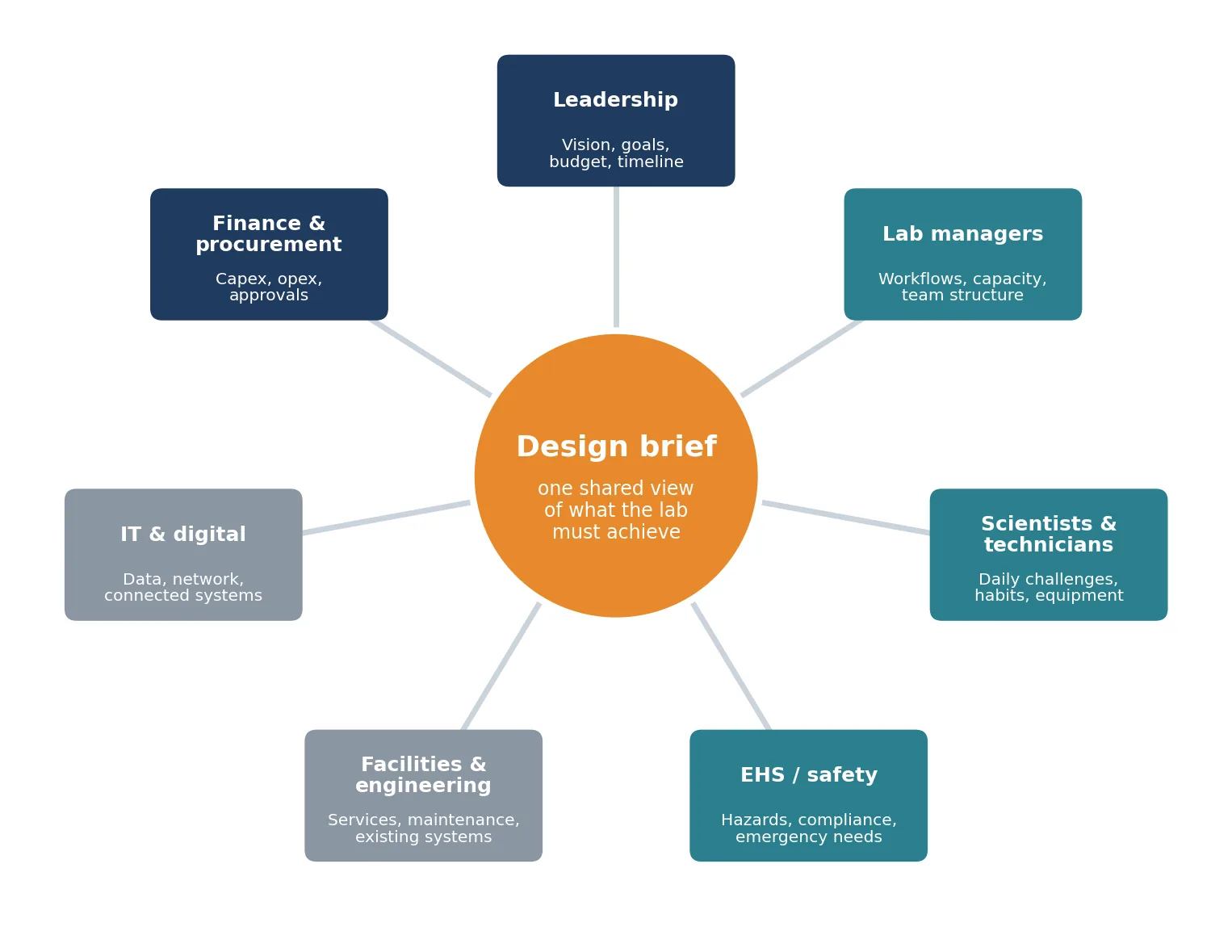
The most complete briefs come from engaging these stakeholders directly, to understand their expectations and operational needs:
| Stakeholder | What to ask them |
|---|---|
| Leadership | What is the vision for this facility? What are the budget, timeline and strategic goals? |
| Lab managers | How does work flow through the lab? How many people, shifts and teams will use it? |
| Scientists and technicians | What slows you down today? What do you use most? What would make your day easier? |
| EHS and safety | What hazards are involved? What compliance and emergency requirements apply? |
| Facilities and engineering | What existing systems must we connect to? What is hard to maintain today? |
| IT and digital | What data, network and connected systems will the lab need? |
| Finance and procurement | What are the capital and running cost limits? How are approvals handled? |
Try this: Before your first architect meeting, spend 15 minutes with one person from each stakeholder group above. Ask them just two questions: "What must the new lab do well?" and "What frustrates you about the current one?" You will be surprised how much you learn.
Where a lab architect adds value
If you are not sure where to begin, that is exactly where a lab architect can help. Building a brief is a skill in itself, and an experienced lab architect knows which questions matter and who needs to answer them.
At Arena Consultants, we help clients ask the right questions to the right stakeholders. Through workshops, questionnaires and site visits, we gather what each group needs and translate those conversations into a comprehensive design brief, often formalised as a User Requirement Specification (URS). That brief becomes the shared reference for every design decision that follows.
Why the effort pays off
We understand that building a thorough brief is an exhaustive exercise. It takes time from busy people. But investing that time benefits the whole organisation:
- It avoids costly rework, because the design is based on real requirements rather than assumptions.
- It speeds up decision-making, because everyone has already agreed what the lab must achieve.
- It keeps the project on schedule, because fewer surprises surface late in design or during construction.
- It produces a better lab, because the architect can minimise assumptions, reduce revisions and design for your team's actual needs.
Ask this: If our architect started designing tomorrow, how much of what they need to know would they have to guess?
Start with the right questions
A doctor diagnoses before prescribing. A lawyer listens before advising. A good lab architect understands before designing. The design brief is where that understanding is built, and it shapes everything that follows.
Taking the time to create it carefully is one of the most valuable things you can do for your lab project.