You Never Stop Learning: Why Lab Design Demands Continuous Learning
By Arena Consultants · March 14, 2026 · 4 min read
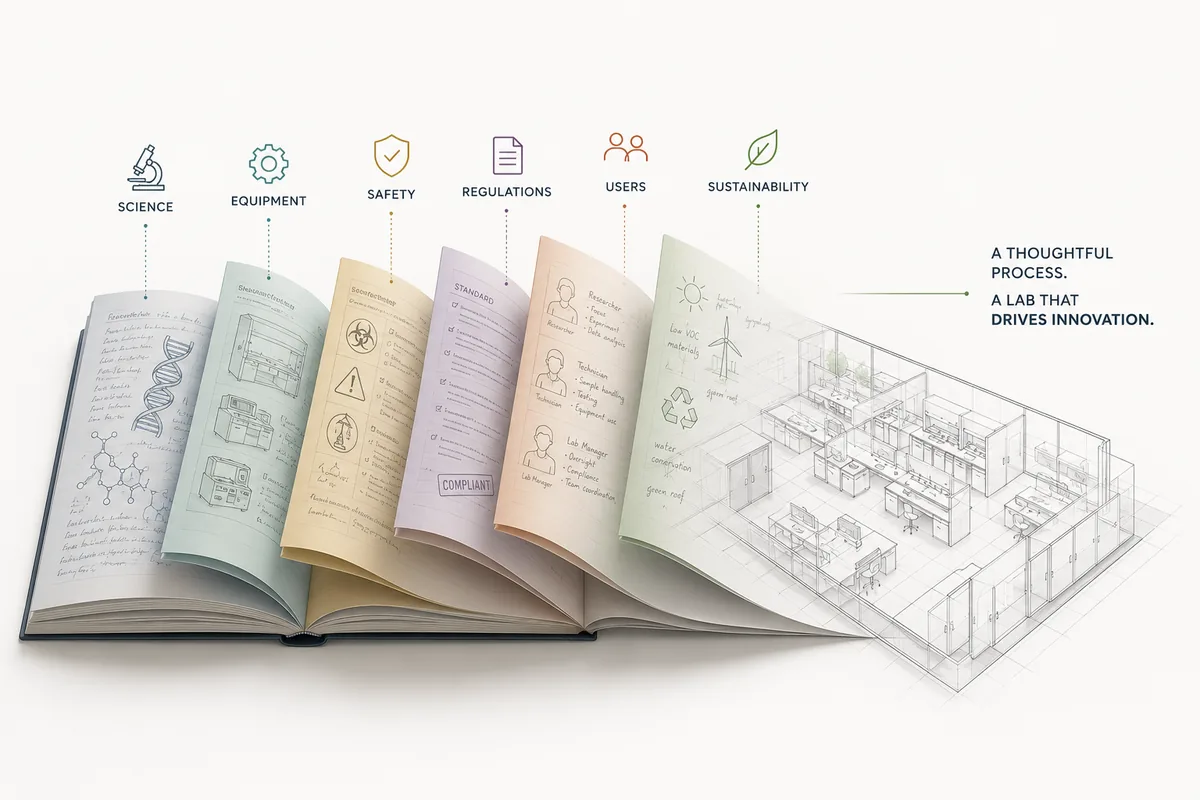
Ask an architect who designs homes, hotels or offices how their work has changed over the past decade, and you will hear about new materials, new styles and new ways of living and working. Ask a lab architect, and the answer is much longer.
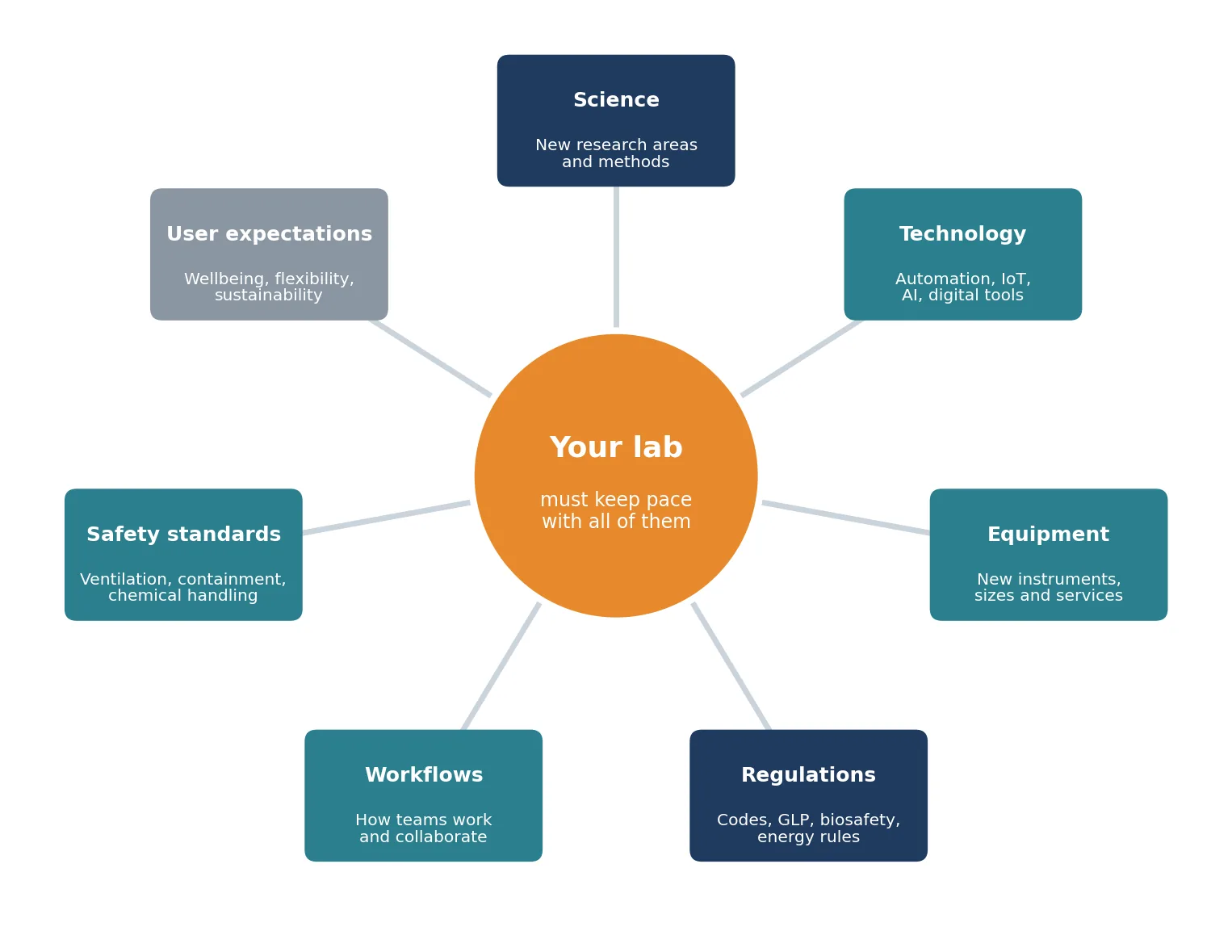
Laboratories are unlike almost any other building type. They have to keep up with constant change: in science, technology, equipment, regulations, workflows, safety standards and the expectations of the people who work in them. A lab designed exactly like one from ten years ago may already be behind the science it is meant to support.
That makes continuous learning not just a professional habit for lab designers, but a responsibility. Our job is to keep pace with these changes and deliver spaces that genuinely support innovation.
Why labs never stand still
A lab sits at the meeting point of several fast-moving worlds. Each one shapes what a good lab looks like today:
| What changes | What it means for lab design |
|---|---|
| Science | New research areas bring new processes, hazards and space needs |
| Technology | Automation, sensors and digital tools need power, data and flexible layouts |
| Equipment | New instruments change sizes, weights, heat loads and service connections |
| Regulations | Updated codes and quality standards change how spaces must be zoned and documented |
| Workflows | Teams work more collaboratively, so labs need more shared and flexible space |
| Safety standards | Better understanding of risk changes ventilation, containment and chemical storage |
| User expectations | Scientists expect daylight, comfort, wellbeing and sustainable buildings |
Any one of these can make yesterday's design assumptions out of date. Together, they mean that every new lab is, in a real sense, a new problem.
Every lab is different
Over two decades of designing laboratories, one lesson has stood out: every lab has its own challenges, priorities and aspirations. A specialty chemicals R&D centre, a biopharma facility, an FMCG innovation lab and an academic research building may share some principles, but their processes, risks and people are completely different.
This is why we do not rely on templates. Reusing a past layout may look efficient, but it carries the assumptions of a different client, a different science and often a different decade. Continuous learning is what lets us start each project from a real understanding of the people and processes we are designing for.
Sound familiar?
- A designer showed you a layout before asking how your team works.
- Your new lab looks a lot like someone else's, but your science is nothing like theirs.
The design met the standards of the day it was drawn, but not the ones that applied when it was built.
How we keep learning
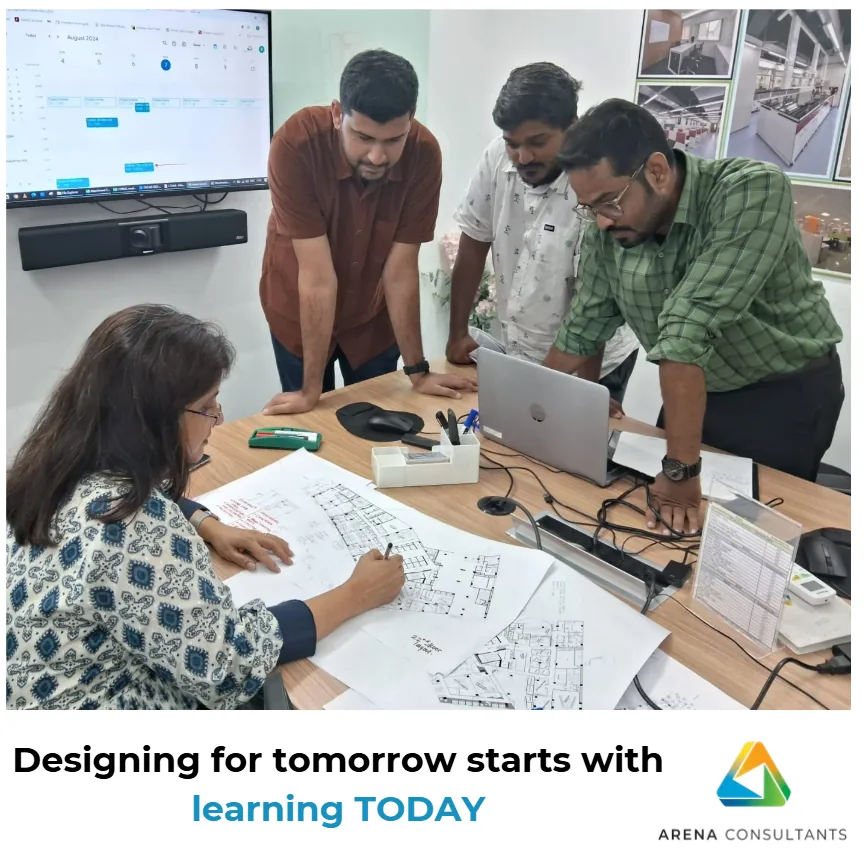
At Arena Consultants, continuous learning is built into our practice. We spend a lot of time:
- Reading and studying the theory and research behind lab planning, safety and sustainability.
- Engaging with industry experts, from scientists and safety specialists to engineers and equipment manufacturers.
- Attending and speaking at conferences where the lab community shares what is working and what is next.
- Following shifts across the scientific community, so we understand where our clients' research is heading, not just where it is today.
- Contributing to the standards themselves. Our principal architect, Archana Salil, is a member of ISO's technical committee on laboratory design (ISO/TC 336) and the Bureau of Indian Standards' Chemical Hazards Sectional Committee (CHD 07). She is also a LEED Green Associate and has spoken at DELabCon, a conference on lab design.
Being part of the conversations that shape lab standards means we understand not only what the rules say, but why they exist and where they are going.
What continuous learning means for your lab
For clients, all of this translates into practical benefits:
- Designs tailored to your way of working, not to assumptions or past templates.
- Labs ready for what is coming, including new equipment, emerging technologies and changing regulations.
- Fewer surprises, because current standards and practices are built into the design from the start.
- Fresh thinking on every project. For us as creative professionals, constant learning keeps the work engaging and intellectually stimulating, and it ensures that no two of our labs ever look the same.
Try this: List three things that have changed in your field in the past five years: a new method, instrument or regulation. Then ask whether your current lab would cope with all three. The answer tells you how future-ready your space really is.
Questions to ask your lab designer
Ask this: What have you learned from your recent projects? A designer who keeps learning will have clear examples of how their thinking has changed.
Ask this: How do you stay current with lab standards and technology? Look for involvement in industry bodies, conferences and standards committees, not just a portfolio.
Ask this: How will you learn about our science? The answer should involve time with your scientists, your SOPs and your plans for the future.
Designing for a science that never stands still
Labs will keep changing, because science will keep changing. The designers best placed to create them are the ones who never stop learning: about new technology, new regulations and, above all, about the people and processes inside each lab.
For us, that is what makes lab architecture so demanding, and so deeply fulfilling.